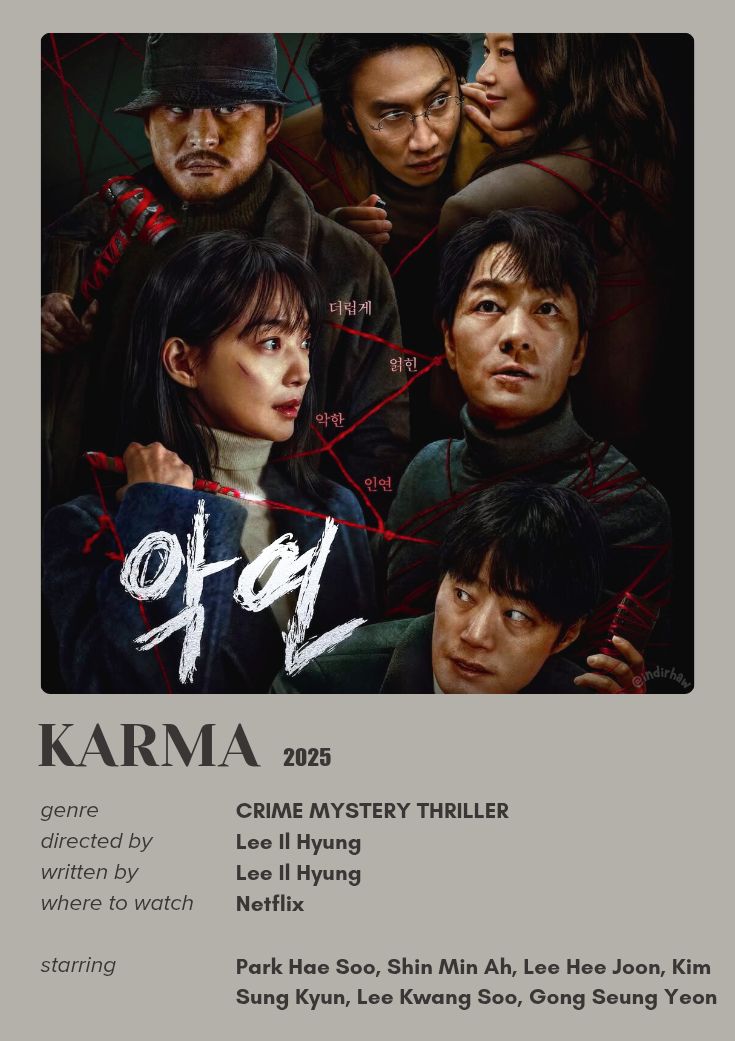
Karma (악연)
Written & directed by Lee Il-hyung
Karma traces lives woven together by choices, each decision threading through time and relationships. It’s a perfect example of concise, compelling storytelling. The non-linear narrative and restrained performances create a quietly gripping experience. Park Hae-soo (박해수) is exceptional, his face, etched with unspoken emotion, carrying entire scenes in a single glance. The cast mirrors this depth, turning silences into moments of raw meaning.
Some viewers find the plot twists predictable, but I’m drawn to the series’ deeper pulse: the slow, inevitable weight of choices. Have you ever wondered how a single moment shapes what follows? The title Karma isn’t just about cause and effect, it’s about the invisible threads that tie us to our pasts and to each other.
What lingers is the series’ quiet intensity, not in loud surprises, but in why choices are made and how they echo. This isn’t a simple morality tale. It’s a meditation on what binds us, what we carry, and what we seek. How do we live with the weight of our decisions? How do we find meaning in their wake?
The storytelling is precise, never heavy-handed. The music hums alongside the emotion, the cinematography, think soft shadows and lingering frames, unfolds like visual poetry, and the pacing trusts you to sit with the story’s questions. There’s no clutter, just characters moving through a world that reflects their hopes and struggles. Karma may not be for those chasing fast-paced thrills. But if you’ve ever grappled with regret, sought fairness in life’s twists, or loved someone through their flaws, you’ll find yourself in its quiet corners.
It left me reflecting on the subtle ways our choices linger. Fate isn’t always a grand design, just the quiet echo of moments shaped by fear or love. In the end, it’s not about the reveal, but the threads that connect us.
Image courtesy of Netflix
Comments are closed.